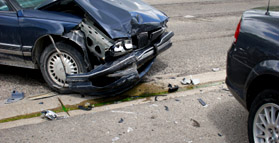
Injury Experience/Crash Performance
JP Research has extensive research and litigation experience studying factors associated with crashes involving automobiles, motorcycles, and other gas- and electric-powered vehicles. The studies include examining publicly available crash data collected by Federal and State agencies; warranty/claims data maintained by manufacturers; and consumer complaints data maintained by the Office of Defects Investigation (ODI), NHTSA, and manufacturers.
Motorcycles/Motorized
Vehicles
JP Research has performed extensive research studying factors associated with motorcycle and ATV crashes in the U.S. and other countries.
Rear Seats/ Seat Back Stiffness
JP Research has conducted a comprehensive study to examine the relationship between seat back stiffness/strength and likelihood of fatality/injury to front and rear seat occupants.
Rollover Research: General
Thanks to decades of research and analysis of real world crash data on vehicle performance and occupant injury experience in rollover crashes, for many auto safety researchs, the name JP Research is synonymous with “Rollover Research”.
JP Research has performed extensive research and numerous studies analyzing factors associated with rollovers themselves, the systems (such as ESC) that are supposed to prevent them, and on roof strength issues stemming from crash/injury experience in rollovers.
Rollover Study: Contact Injury Statistics
For the
Alliance of Automobile Manufacturers Safety Policy Committee, JP
Research led a
comprehensive rollover
crashworthiness research project. First, as an analytical response to estimates made by
NHTSA, the JP Research team used NASS injury statistics to
make an
accurate statistical estimate of the number of belted occupants
seriously injured in rollovers through contact with various injury
sources, including “roof contact.” (See Roof Crush Resistance Docket, Submission No.
NHTSA-1999-5572-119.) Additionally, an in-depth engineering review was
made of individual NASS/CDS cases to explore injury mechanisms to
belted occupants in rollovers. (See Roof Crush
Resistance Docket, Submission No. NHTSA-2005-22143-194.)
Roof Strength Studies
In 1995, Moffatt and Padmanaban presented a groundbreaking study evaluating the effects of vehicle roof strength to vehicle weight ratio on odds of occupant fatality/serious injury in rollover crashes. The study concluded there was no relationship between roof strength-to-weight ratio and likelihood of rollover injuries. For details,
Several of JP Research’s more recent roof strength studies are highlighted below:
2004 Roof Strength/Headroom Study
JP Research led an update of the 1995 study to include more data and reflect changes in the population of vehicles on U.S. roads.
The study also investigated the influence of pre-crash headroom on the likelihood of injury for belted occupants. The analysis concluded that SAE H61 Effective Headroom is not a statistically significant variable in influencing injury for belted drivers, and that roof strength-to-weight ratio remains statistically insignificant. This research is reported in “Addendum to Docket Submission NHTSA-1999-5572-70,” Roof Crush Resistance Docket, Submission No. NHTSA-1999-5572-79 (April 27, 2004).
2008-2010 Roof Strength Studies
The 2004 studies were again updated to include and expand prior
research on roof strength vs. likelihood of injury.
Electronic Stability Control (ESC) Studies
JP Research has performed several comprehensive studies looking
at thousands of state police accident reports (PARs)to address the critical events
(departure from road, loss of directional control) leading to
rollovers for ESC vehicles and non-ESC vehicles.
Seat
Integrated Restraints (SIRS) vs. Conventional Belts
JP Research has performed a detailed statistical analysis
comparing the relative effectiveness of SIRS vs. conventional belts
in reducing injury/ejection risk to belted drivers in rollover
crashes. The study concluded that both types of belts are highly
effective in reducing injuries /ejections and found there is no
statistically significant difference between the performances of
these belt systems out in the field.
Airbag
Effectiveness and Performance
JP Research has done extensive research examining injury risk and effectiveness
associated with front and side airbags. Using the NHTSA-maintained
Special Crash Investigation (SCI) files, JP Research has performed
several studies looking at injury risk to children and adults in
front seats when airbags deployed.
Vehicle
Compatibility: USCAR Size/Mass Effects Studies
As part of an unusually complex data evaluation project, JP
Research performed a series of vehicle compatibility studies for
the United States Council for Automotive Research (USCAR) Safety
Working Group. The studies centered on the influence of vehicle
size, versus mass, on odds of driver fatality. For these studies,
JP Research investigated 60 vehicle size parameters to determine
how vehicle size (separated from mass) affects safety. The relative
importance of vehicle stiffness, mass, bumper height,
and other variables in influencing odds of fatality were evaluated.
Analyses were performed to determine the effect of the various
stiffness measures on odds of fatality in two-vehicle frontal
crashes.
In-Depth
NASS/CDS Case Reviews
JP Research frequently uses algorithms to perform in-depth engineering reviews of photographs/scene diagrams/case summaries for NASS/CDS cases. Such detailed examination of crash data is undertaken to explore injury severity, injury mechanisms, accident/vehicle factors, belt use/ejection status, crash severity, vehicle intrusion by component/magnitude and environmental factors associated with crashes.
Survival/Reliability Analysis
JP Research frequently performs survival/reliability analyses to predict the number of failures and annual failure rate per million elements produced for various consumer products including heating elements used in appliances and automobile components such as axles and brakes. In a recent study, JP Research estimated the number of future failures using well known retirement models and estimated the failure rates and number of future failures with and without applying the retirement model using both the Weibull distribution and lognormal distributions. Several sensitivity analyses and non-parametric analyses were performed to address the current and future failure rates of heating elements.
Tractor Trailer Side Underride Analysis
Tractor Trailer Side Underride Analysis
JP Research has evaluated side underride collisions using field accident data obtained from federal and state agencies and has analyzed the number of light vehicle occupants injured or killed in side underride crashes with “combination trucks”. JP Research has also performed an in-depth review of side underride crashes including photographs and scene diagrams to analyze the number of fatalities/injuries with passenger compartment intrusion. To account for an underreporting of underride accidents in field data, JP Research has also reviewed over 700+ police reports from various states to determine the amount of underreporting, which has helped to provide the total estimated annual fatalities for all side impact underride collisions with combination trucks.
|